Article Summary
- Hidden Door Store builds concealed ballistic-rated doors that prioritize security without sacrificing aesthetics.
- UL 752-rated doors can protect against ballistic threats, forced entry and unauthorized access when properly installed.
- Modern hidden ballistic doors work in homes, offices, safe rooms and secure storage spaces.
Doors for Ballistic Strength: Shop the Armored Series at Hidden Door Store
Security design has shifted over the past few years. More homeowners and commercial property owners no longer want a visible vault door or an obvious reinforced entrance dominating a room. They want protection that disappears into the surrounding architecture.
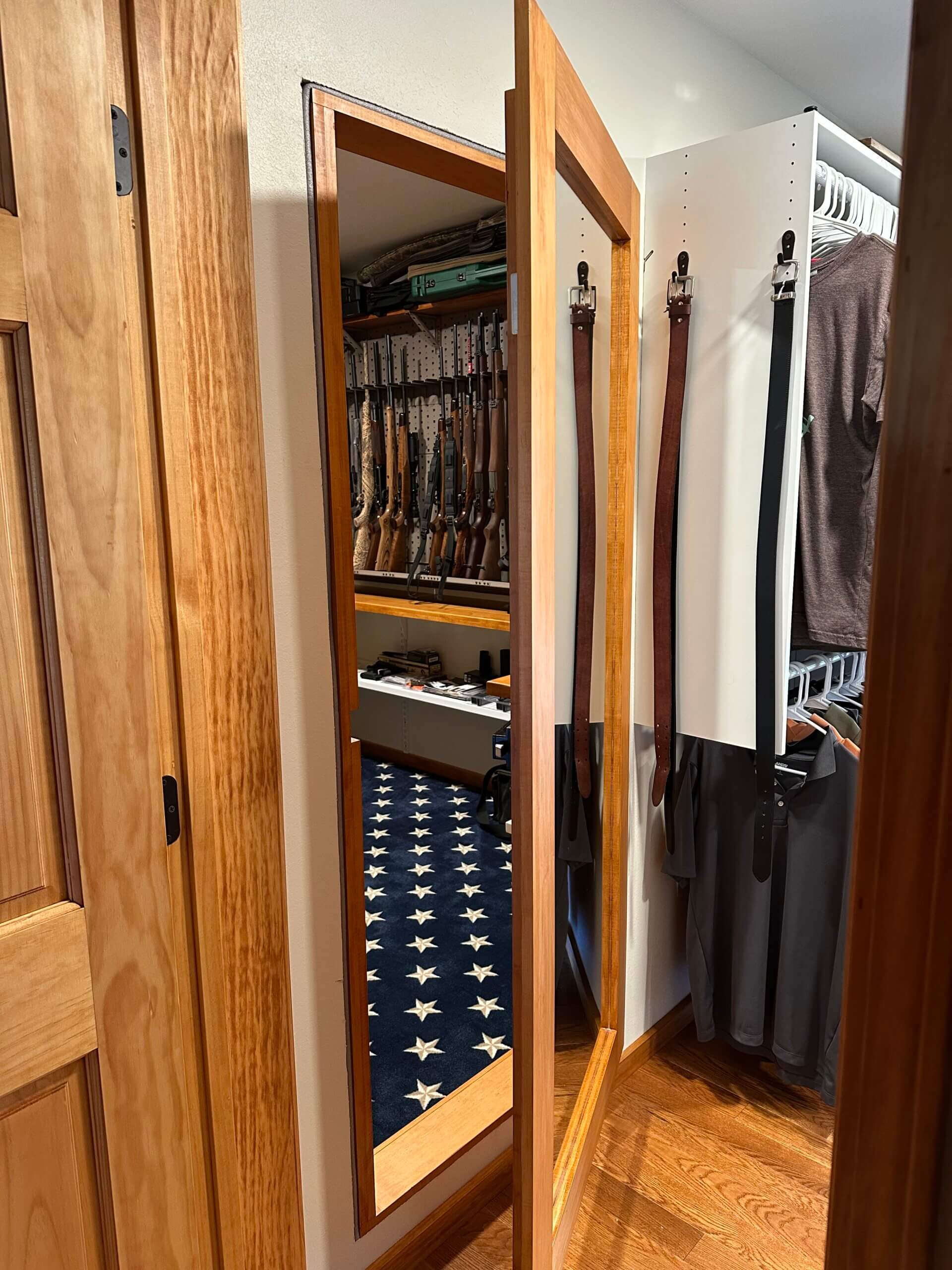
That shift has driven interest in hidden ballistic doors that combine security, privacy and aesthetics in a single system. Whether you’re protecting a safe room, a secure storage area or an office, hidden ballistic doors let you prioritize protection without giving up appearance.
What Is a Ballistic-Rated Door
A ballistic-rated door is a reinforced door system engineered to resist projectile impact, as defined by the UL 752 standard. Unlike a standard residential or commercial door, these systems use specialized materials and reinforced structural components. Ballistic-rated doors for homes add a layer of safety against weaponized threats while still blending with the property’s design.
Most ballistic door systems are built around steel cores, composite ballistic materials and reinforced frames. A properly engineered reinforced custom security door is meant to integrate with the surrounding architecture rather than look industrial. That balance between security and concealment is one reason more homeowners and commercial property owners are investing in hidden security doors.
One important distinction: ballistic and forced-entry resistance are not the same thing. A door can stop projectiles without offering much protection against aggressive pry attacks or breach attempts, and the reverse is also true. That’s why a complete door system matters more than isolated materials.
Use Case 1: Residential Safe Rooms and Panic Rooms
Traditional security systems often prioritize function over appearance. That works in some environments, but many modern homes and offices want security features that feel integrated rather than industrial — especially in luxury homes, high-end remodels and properties in remote or high-risk areas.
Property owners want secure spaces that stay private. A concealed room behind a hidden door attracts less attention than a visible vault entrance, and that quiet entry is what has driven so much interest in doors that blend in while still offering serious protection.
There’s also been a broader shift toward metal-core construction. A few years ago, around 90% of Hidden Door Store’s concealed doors were built primarily from wood, often with upgraded locks but mostly low- to medium-security. Today that ratio has flipped — roughly 90% are built from metal, and many are very high-security.
Residential security doors designed for panic rooms often include:
- Reinforced steel core construction
- Multipoint locking systems
- Emergency manual release systems
- Concealed access controls
- Forced-entry resistance frames
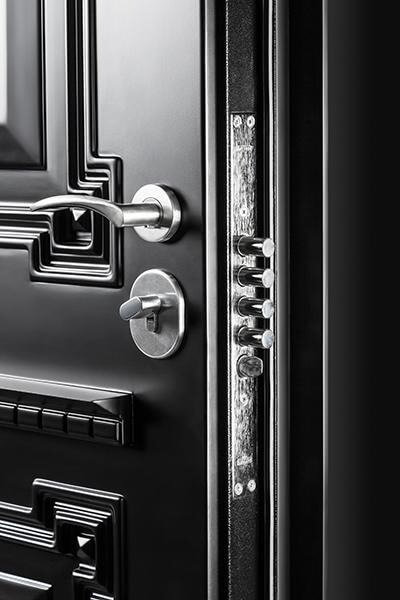
Emergency exit comes up early in most planning conversations. Customers want to know what happens if they’re inside during a power failure or mechanical issue. Every door includes a manual interior release so anyone inside can exit safely, even when the power is off or batteries are dead.
The Armored Embassy Series Single Door is an ideal solution for homes and families to secure valuables and family members behind forced entry-resistant doors. You can also integrate ballistic protection UL 752 Level 3, which is effective against most types of handguns.
Use Case 2: Firearms, Valuables, and Secure Storage
Ballistic doors also work well for concealed firearm storage rooms, safes and high-value storage areas. In many homes, the goal is protection and discretion.
Hidden doors are used to conceal access to gun rooms, safes, jewelry storage, document vaults and collector spaces. Keeping valuables out of sight adds a layer of security beyond a traditional safe — what an intruder doesn’t see, they can’t take.
Ballistic construction on models such as the Armored Fortress is rated for UL 752 Level 3 Doors and UL 752 Level 8 Doors. The ratings also help reduce the risk of accidental firearm discharge of handguns and rifles within storage rooms.
These systems are especially useful for firearm owners, collectors, estate properties, clients with multiple residences and families wanting restricted-access storage. A quality solution such as the Armored Fortress line balances concealment with high-security performance.
More customers are also using concealed rooms as a lock-away space when service providers, contractors or guests are on the property. A reinforced concealed room lets owners protect sensitive belongings without installing an obvious vault door in the middle of a living space.
Use Case 3: Offices and Commercial Applications
Commercial projects increasingly incorporate hidden ballistic-rated doors into offices, religious buildings and high-traffic environments.
These spaces can function as:
- Emergency shelters
- Secure storage rooms
- Executive safe rooms
- Private meeting spaces
- Restricted-access document storage
Executive offices often want high security without altering the professional appearance of the space. Hidden ballistic doors let businesses preserve aesthetics while addressing protection behind walls, cabinetry or architectural finishes. Commercial installs need careful alignment because multipoint locking systems demand extremely precise framing. According to Hidden Door Store, roughly 99% of installation problems trace back to an opening that wasn’t perfectly plumb — which is why they recommend using a laser to verify both vertical members are parallel before the frame goes in. Even slight frame distortion will bind the perimeter locking pins.
That precision matters even more on reinforced steel-core doors, which can carry 10 to 20 perimeter locking pins and weigh significantly more than standard wood or hollow-core doors.
Testing and Certification
Ballistic doors rely heavily on third-party testing and certification standards. Without verified testing, performance claims become difficult to validate.
The most recognized U.S. standard for ballistic-rated doors is UL 752. Hidden Door Store routinely builds UL 752 Level 3 and Level 8 doors, with Level 5 and Level 10 available on request. Level 3 stops most handguns; Level 8 stops rifle fire.
A higher UL level does not always mean a better solution. If the surrounding walls remain unreinforced drywall, a very high security rating on the door alone may not provide meaningful real-world protection. Other vital standards to consider include the National Institute of Justice (NIJ) ballistic standards for doors — usually used for armor and helmet grading — European EN-rated security doors that protect against burglaries and forced-entry resistance certifications.
A critical detail: certification needs to cover the full system. Some manufacturers test only individual components rather than the entire door assembly. A properly certified bulletproof door system is tested as a complete installation — slab, frame, hardware, locking system and anchoring. The frame and surrounding assembly often fail before the slab does, which is one reason reinforcing the walls matters as much as the door itself.
What to Look For
Not all reinforced security doors offer the same level of protection or engineering quality. A bulletproof rating doesn’t automatically mean the door will stop every threat. When you’re evaluating ballistic doors, focus on verified testing, installation quality and manufacturer support.
Key considerations include:
- Verified third-party testing
- Full-system certification
- Clear warranty information
- Transparent material specifications
- Manufacturer responsiveness
- Installation guide
- Long-term service support
Installation quality has a major effect on door performance. Even a top-tier armored door for a home will fail if the opening isn’t properly prepared or the door isn’t installed in alignment.
Hidden Door Store Security Door Systems
Choose a provider that offers a high-quality product range that balances discreet appearance, engineering security and long-term usability. Look for a no-nonsense 10-year warranty for peace of mind that the door remains as functional and camouflaged for a decade as it was at installation.