Article Summary
- Wall panels and full-length mirrors are believable disguises for hidden doors.
- The Hidden Door Store explains that concealed hardware, precise alignment, matching aesthetics with adjacent home features, and flush installation are vital for camouflage.
- Visible gaps, exposed frames and misalignment can expose a secret door.
These 2 Hidden Door Installs Completely Disappear
Secret doors hide in plain sight by design, but some disguises work better than others. If you want a hidden door that completely disappears, look at hidden wall panels and mirror doors. Here’s how each design avoids detection.
Wall Panel Hidden Doors: The Most Seamless Option
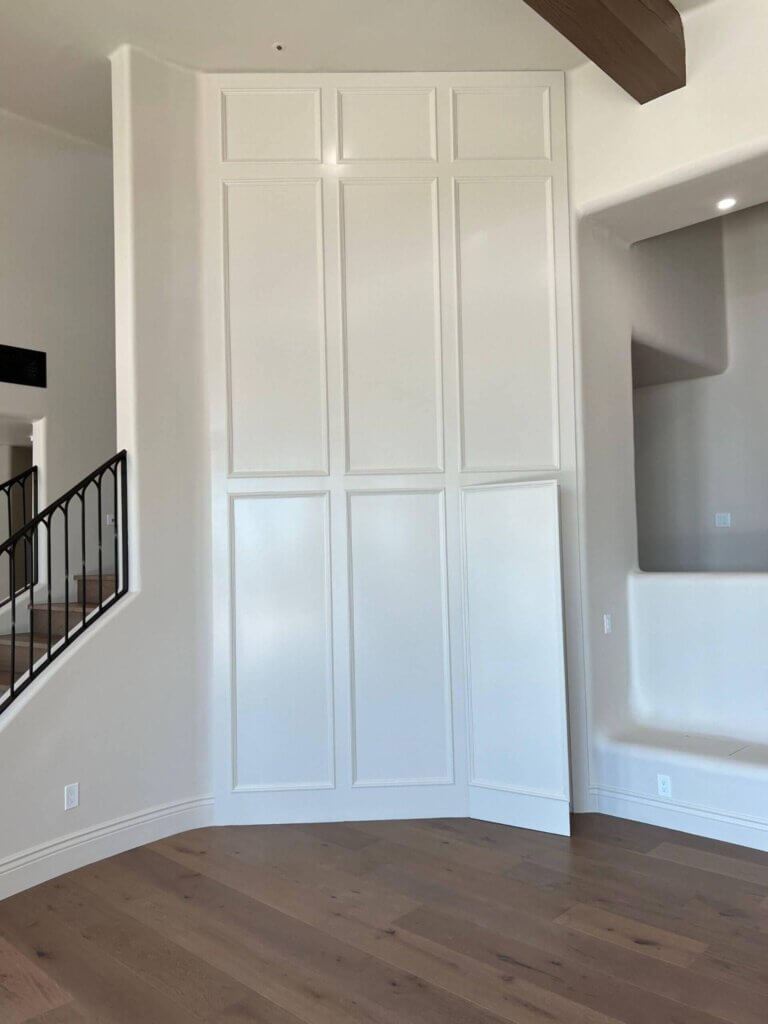
A wall panel door pretends to be part of a continuous wall. The opening disappears into the surface and most people walk right past without noticing — which makes it a strong fit for home offices, safe rooms and other private spaces. The trade-off: a panel door has to coordinate with the rest of the wall, so the layout needs to be planned before the door is ordered.
The door is built to match the surrounding wall paneling. In traditional homes, that can mean shiplap, beadboard, wainscoting, board-and-batten, tongue-and-groove or Victorian panels. In modernist spaces that reject ornaments and embrace minimalism, it can blend with flat paneling like concrete tiles.
Why They Work
Wall panel doors work because they remove the visual break. The seams and outlines stay hidden as long as the door matches the surrounding paneling pattern exactly.
Some paneling styles make a secret door harder to hide. That’s why the Hidden Door Store designed its secure panel secret door kit to work with any veneer. It’s a blank canvas that lets you overlay anything — so the kit doesn’t look like an afterthought or stick out like a sore thumb next to the rest of your wall.
Mirror Hidden Doors: Function and Concealment
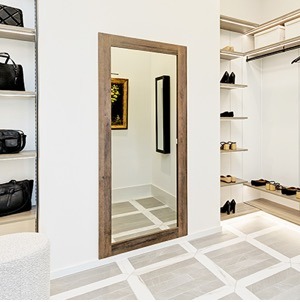
A mirror hidden door uses a working full-length mirror as the disguise — something no one questions in the right room. It conceals secret rooms or passages in bathrooms, bedrooms and dressing areas, and can even pass for a closet. Because a mirror door only needs a correctly sized rectangular opening, it’s also one of the easier hidden door systems to install.
Mirrors create an illusion of depth, so a mirror door doesn’t look out of place even in tight spaces.
Why They Work
Mirror doors work because the mirror is what people see — not the door. Built-in frames make the unit look like a permanent wall fixture. These are prehung, fit standard openings and start at 26 inches wide and 72 inches tall.
Hidden Door Store’s mirror systems can be flush-mounted and thresholdless, leaving the floor clear and uninterrupted. The fact that no raised transitions supports accessibility and independent living makes these doors a fit for anyone with mobility challenges.
What Makes a Hidden Door Truly Disappear
Concealed hardware is the biggest reason a hidden door actually disappears when closed. Standard hinges won’t do the job — over time they cause the unit to sag and warp. The best installs keep every piece of hardware out of sight.
Precise alignment matters just as much. Doors that are plumb vertically and level horizontally function smoothly and correctly, opening and closing without rubbing on the floor or wall opening. Friction wears the finish and leaves marks.
Matching the material and finish to the surrounding wall is essential. A panel or mirror only passes inspection when it looks like part of the original home — as old as the features around it.
Flush installation completes the camouflage. The door sits even with the surrounding wall, with no proud frame to give it away.
Common Mistakes That Ruin the Effect
Wall panel and mirror hidden door designs are convincing, but these mistakes can blow their cover.
Visible Gaps or Uneven Spacing
Obvious outlines are a dead giveaway. Intentional gaps are necessary for movement, but they shouldn’t be too tight either. A good rule of thumb: the gaps should be no thicker than two pennies stacked flat, and they should stay consistent from top to bottom.
If your wall panel design features architectural elements, the Hidden Door Store recommends choosing designs with overlays, like picture frame molding, which conceal larger, more forgiving gaps and prevent issues from wood movement over time.
Mismatched Finishes or Paint
Fresh stain or paint can make a panel or mirror door stand out from the rest of the wall. The fix is to buy an unfinished product. That way, you can stain or paint it at home alongside the surrounding wall surfaces, so everything ends up looking the same age.
Wood reacts to its environment — it expands, contracts and eventually warps with humidity and temperature swings. Sealing it with paint or stain keeps moisture out and helps prevent obvious gaps from opening up later.
Standard Door Frames Left Exposed
Standard frames stick out from the wall and immediately give the door away. Flush mounting solves the problem — the door sits even with the surrounding surface, with nothing extra to draw the eye.
Poor Alignment With Surrounding Panels
Nothing exposes secret doors better than misalignment, especially when the disguise is a wall panel and the paneling style is vertically oriented acoustic slat.
Before buying a hidden door, think about the wall first. Think hard about how you intend to blend it — camouflage is what makes or breaks the install. With a panel design, especially wainscoting, sketch the layout, decide how many panels you want and where they need to fall before you order the door. Otherwise the panel widths and seam positions won’t line up and the disguise won’t work.
The Keys to Effective Concealment
Wall panels and mirrors make excellent disguises for hidden doors, but they’re not foolproof. Be aware of what makes the disguise work and what ruins it. To find the right design for your space, contact the Hidden Door Store today to talk through your project.