Article Summary
- An interior door is only as strong as its door slab and the frame, hinges and lock installed around it.
- Drawing on decades of hidden-door engineering experience, Hidden Door Store builds pre-hung, door-and-frame systems engineered to work together as a single security unit.
- These doors typically make the most sense to integrate into bedrooms, home offices, safe rooms and storage areas holding valuables.
Most homeowners shopping for a secure interior door focus almost entirely on the door slab itself, from its thickness and material to whether it looks “tough.” However, a door is only as strong as its weakest link. The frame it’s hung in, the hinges holding it in place and the lock securing it must all perform together. Reinforced, well-engineered secure doors for a home can also be built to disappear into the space’s existing design.
What Makes an Interior Door Secure?
Knowing how to secure an interior door so no one can get in means looking at the door as a whole. The door’s ability to resist a kick, a pry bar or sustained force depends on whether it has hollow or dense paneling. Frame and jamb strength also matter.
A flimsy frame gives a “false sense of security” because it becomes the point that gives way, even if the door itself could otherwise stop a bullet. Meanwhile, the jamb is the structural anchor that the door locks into. If it’s made of thin, standard-grade lumber, it can split or crack under force, even if the door itself holds.
Hinges are a frequently overlooked attack point in an interior security door. Standard hinge pins can sometimes be knocked out from the exposed side, and hinge screws that are too short may not reach the framing studs behind the jamb.
Lock type and placement also matter, but they cannot compensate for a weak jamb. A stronger lock bolted to a weak jamb presents a vulnerability, as the jamb around the strike plate can fail under force.
Such vulnerabilities are why real-world break-ins, even against well-resourced homeowners, can succeed through force rather than through defeating a lock mechanism. In 2024, a coordinated theft ring targeted the homes of professional athletes. They made off with valuables worth over $2 million by timing break-ins when the residents were away.
While locks deter casual attempts, the material, frame and installation quality of a home security door determine what happens when someone is determined to get in.
Solid-Core vs. Hollow-Core Interior Doors
Most standard doors have hollow cores. They’re typically a thin wood veneer wrapped around a lightweight cardboard honeycomb or plastic lattice, built for privacy and cost, not force resistance. A hard kick can puncture their thin skin because there’s no material behind the surface to absorb the impact.
Solid-core door security is stronger. It replaces that hollow cavity with dense wood composite or engineered fill, which adds real weight and resistance to punch-through. It also offers better sound dampening.
If you have high security needs, a reinforced interior door is a good choice. A purpose-built unit is also a viable alternative, as it is engineered and tested to resist sustained, forceful or tool-assisted entry attempts.
What Materials Are Best for a Secure Interior Door?
Material choice shapes strength, weight, appearance and installation complexity. For high-security doors for homes, match the material to the room’s aesthetics, security needs and design requirements.
Solid Wood
Traditional solid wood is dense. It’s heavier than hollow-core and has a natural grain and finish that blend well with most residential interiors. It adds real mass and resists basic force better than hollow-core doors.
However, on its own, solid wood isn’t rated or tested against sustained, tool-assisted or ballistic attack the way engineered security materials are. It can resist a shoulder strike that would punch through a hollow-core unit, but a determined attacker with a sledgehammer or pry bar can break through it.
Engineered and Solid-Core Construction
Engineered or solid-core doors are a middle-ground option. They have a dense composite or fiberboard fill that replaces the hollow cavity and provides resistance without the cost or weight of a full steel system.
These doors tend to handle humidity and temperature fluctuations better than solid wood doors. However, engineered and solid-core doors can still fall short of the forced-entry or ballistic testing standards built into purpose-made security doors.
Steel and Reinforced Door Systems
These are the top-tier options for both forced-entry and ballistic resistance, as they’re typically built around a metal core rather than wood or composite fill. These higher-end systems have built-in redundancy. They have two layers of grating, which encase the steel core, so that a strike or breach attempt on one side still leaves a second layer of protection intact behind it.
Hidden Door Store constructs UL 752 Level 3 doors, which are rated to stop most handgun fire. Level 8 doors can stop rifle fire. A reinforced interior door is heavier than other door types and often requires more deliberate installation planning.
Designing a Secure Door Frame
Even a steel, ballistic-rated door slab is only as good as what it’s anchored into. The strike area, which is where the bolt seats into the frame, is one of the most commonly attacked points on any door. Reinforcing this area with metal plating or a reinforced jamb liner raises the force needed to breach it.
Standard door hardware is often installed with short screws that only bite into the jamb itself, not the structural framing behind it. Upgrading to longer screws that reach into the wall studs increases resistance to prying and kicking. The frame as a whole must also be bolted or screwed securely into the surrounding wall structure.
With pre-hung door systems, the door and frame are engineered and installed as a single unit, ensuring a perfect fit. A poorly anchored frame or misaligned unit can shift over time. A properly engineered door-and-frame system is built to handle the weight and movement of daily use. It stays free of uneven floor scuffs, sag or alignment issues that lesser installations typically need extra casters to correct.
To make an interior door more secure, invest in a reinforced door frame. Standard residential frames can remain a weak point even after the door itself is upgraded. A mismatch between the door and frame can limit the benefits of the investment.
Choose the Right Locking System
The best interior door for security comes with a lock. Choose a locking system based on whether you prioritize daily convenience, privacy or forced-entry resistance.
Common locking systems include:
- Deadbolts: These are the baseline, mechanically simple option that resists picking better than a standard doorknob lock.
- Mechanical locks: Keypad-style mechanical locks are a battery-free option for rooms where reliability without power matters.
- Keypad or electronic locks: These locks allow code-based access without a physical key, though they require battery and firmware considerations
- Smart locks: These add remote monitoring and access logging, making them appealing for homeowners who want visibility into who is entering a space and when.
- RFID or access-control options: These high-security door locks, which use a card- or fob-based entry method, are common in high-traffic spaces such as home offices.
- Multipoint locking systems: These engage the door at multiple points along the frame, distributing force across the frame rather than concentrating it at a single strike point.
Choose security door locks based on the threat scenario you’re worried about. For example, if you have children, you may need a way to open the door from outside the room. However, the same convenience feature can become a vulnerability when you are under duress.
A magnetic sensor access option offers a fully concealed alternative. You can use a magnet to activate an electronic switch embedded into the door slab. Battery-powered versions can last roughly two years, and a manual override tool is available if the battery depletes.
Where Do Secure Interior Doors Make Sense in a Home?
Different rooms call for different security levels. The right security door for a bedroom may not be the same as a secure door for a home office. It depends on what or who is being protected. Do you want to protect sensitive documents, securely store firearms or hide from burglars?
Burglars often target residential properties. In 2024, over half of burglaries occurred at homes or residences, with daytime break-ins outnumbering nighttime ones. If you keep your valuables where you sleep, a secure bedroom door can provide extra protection.
Access risk can also come from inside the home, especially with firearm storage. Research shows most children know exactly where a household gun is stored and can access it within minutes. A properly secured door for valuables or firearms provides a more effective safeguard for any room that stores guns.
To decide where to put a secure interior door, start with the room’s risk profile. A bedroom may need protection because you are vulnerable while sleeping and changing. In comparison, a home office often contains sensitive business records, client data or expensive equipment. If the room stores firearms, the priority shifts toward controlled access and household safety.
For wine rooms, collectibles rooms, storage areas and home vaults, your main concern is asset protection. A safe room further raises the stakes because you may rely on the door during an active threat. Even if rooms don’t look like traditional “security” spaces, they may still justify strong access control.
Can a Hidden Door Also Be a Security Door?
Concealment keeps intruders from knowing a door exists at all, while forced-entry protection ensures doors resist attacks once they’re found. However, these factors aren’t mutually exclusive. A hidden door can be built around the same reinforced materials and multipoint locking systems as a secure room door.
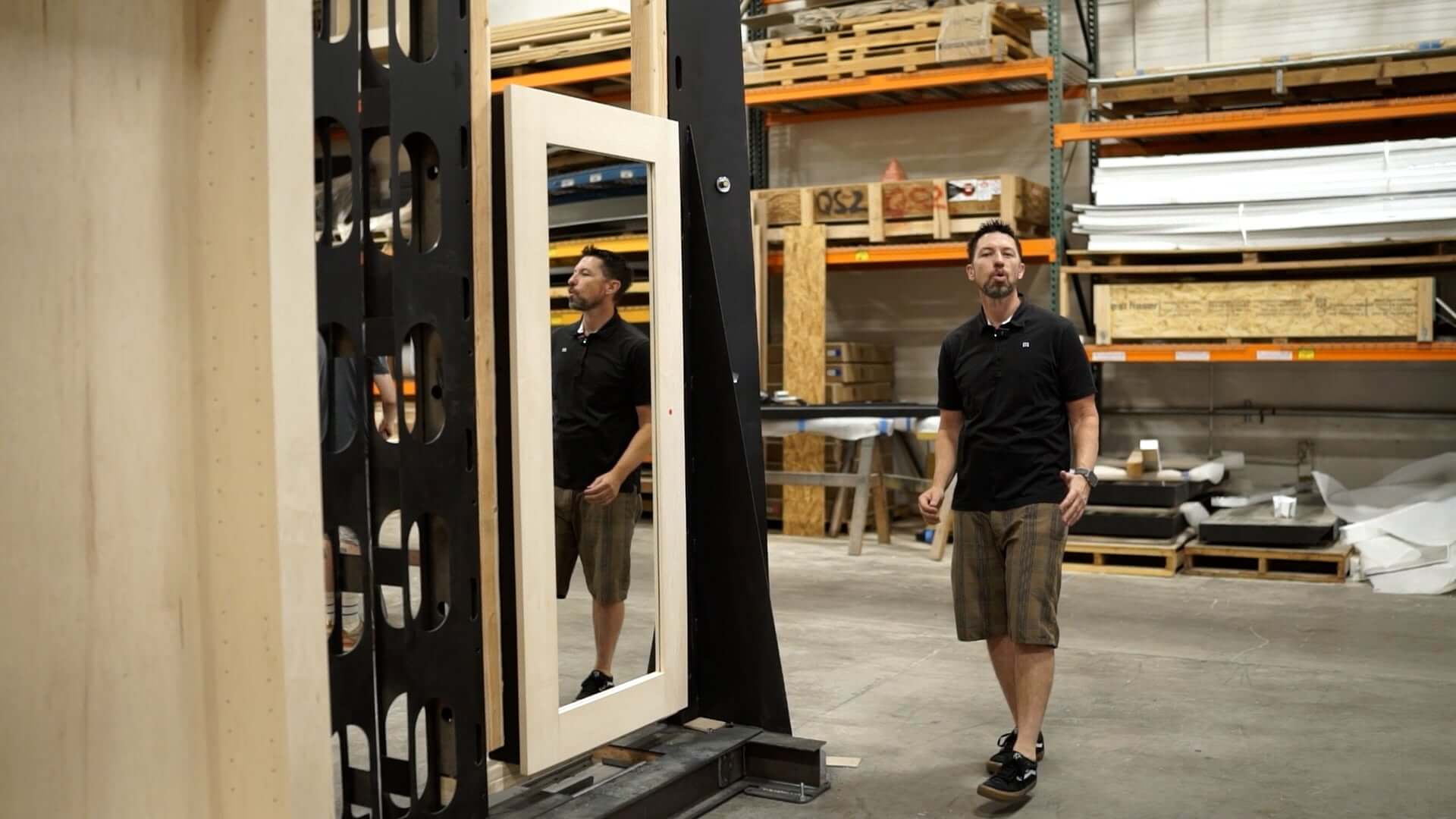
Consider the vault mirror door from the Hidden Door Store, which uses 10 active and 8 passive locking pins for extreme resistance to forced entry. It also has a manual interior release, preventing occupants from accidentally locking themselves in. Premium hardwoods, precision hardware and millimeter-level alignment ensure it looks like a typical full-length mirror.
Concealed steel security doors can have visible seams less than 1/16 inch thick, allowing them to blend in with wall panels, bookcases or mirrors. This tolerance separates a convincing hidden door from an obviously disguised one.
What to Ask Before Buying a Secure Interior Door
Ask what the door is designed to resist — forced entry, ballistic impact or both — because “secure” can mean very different things. Then, look beyond the slab. A security-rated door in a standard frame undermines the system. The frame, lock, wall support and installation requirements all need to match the door’s weight and threat level.
Pay attention to tested or independently verified ratings, as ballistic and forced-entry claims can otherwise be difficult to confirm. Doors rated to withstand fire from handguns, such as 9mm, .357 Magnum and .44 Magnum, sit at a different ballistic tier than doors rated to withstand rifle and automatic weapon fire. Higher bullet-resistance ratings generally mean heavier doors, which may require specialized installation and structural reinforcement depending on the surrounding wall and frame.
Finish and hardware matter, too, especially if the door needs to disappear into a bedroom, office or safe-room design rather than announce itself as armored.
You should also ask whether professional installation is required, as this varies significantly by door weight and complexity. A heavy, high-security interior door may need specific wall or floor support. Moreover, if the door is customized to match the home’s interior, professionals may need to install it to ensure millimeter-level alignment.
Standard installation for a pre-hung security door system typically takes a few hours with basic tools. However, measuring and preparing the rough opening beforehand often takes longer.
Frequently Asked Questions
These answers cover common questions about secure interior doors.
What is the most secure type of interior door?
The most secure interior door is a steel and reinforced door system that’s paired with a reinforced frame and multipoint lock. It generally offers the highest level of forced-entry and ballistic resistance available for interior use.
Are steel doors good for interior use?
Steel doors can be finished, painted or clad to match residential interiors. You can even conceal them behind a mirror or wall panel rather than present them as an obviously armored door.
What type of door should you use for a safe room?
For a safe room, a hidden door should be solid steel or reinforced, and paired with a frame rated to match. The frame and anchoring determine whether the door’s rating holds up in practice.
Is the door or the door frame more important for security?
Neither matters much without the other. A strong door in a weak frame still fails at the frame, which is why the two are treated as a single system rather than as separate upgrades. Explore your options by browsing the high-security doors from the Hidden Door Store, whose Arizona workshop builds handcrafted systems for homeowners who want a secure, architectural centerpiece rather than a low-quality, mass-produced alternative.