Article Summary
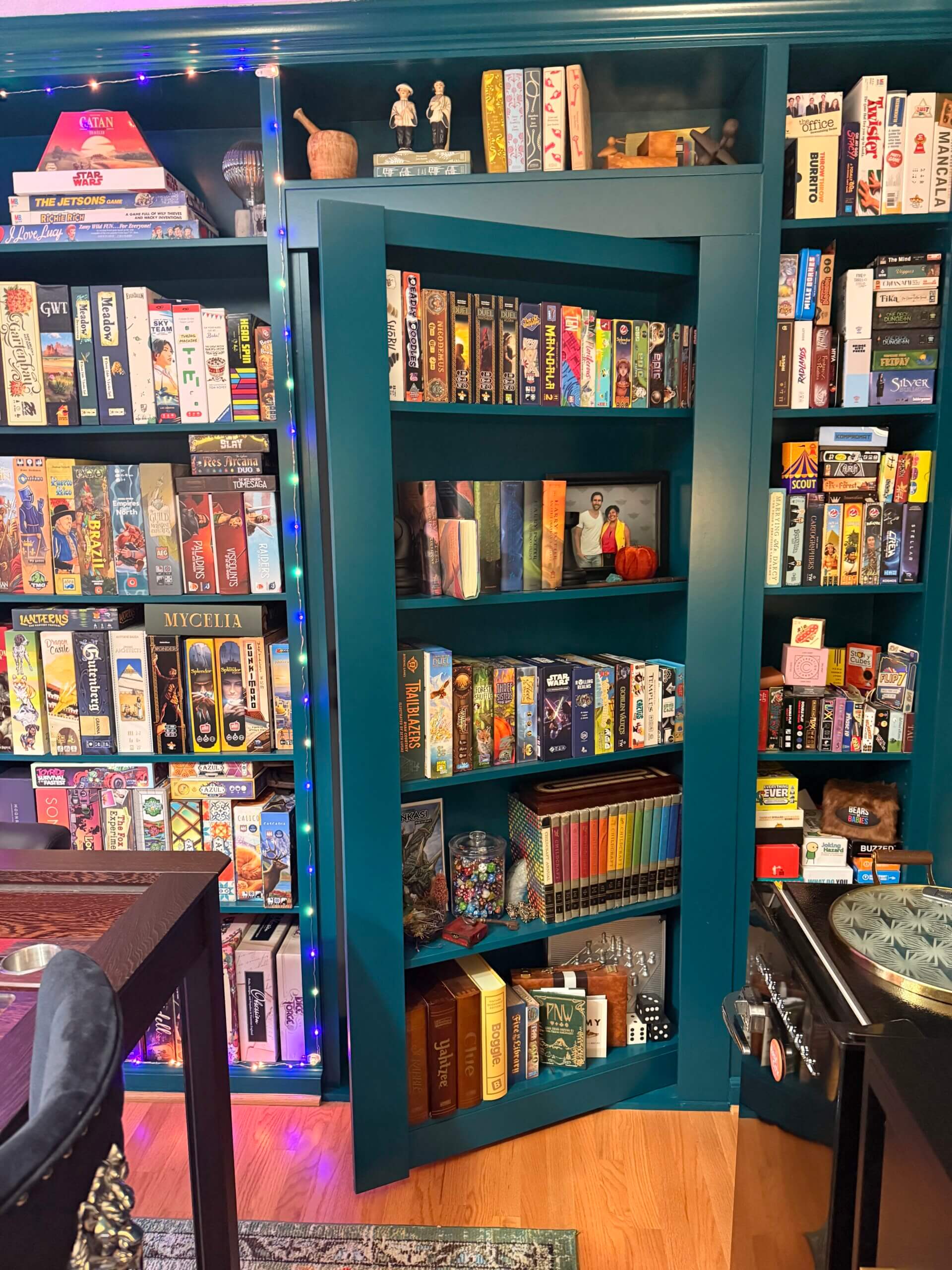
- Secret doors from the Hidden Door Store fit into wall openings.
- Some designs feature an optional freestanding appearance that mimics stand-alone furniture.
- Concealment, construction-related disruption, installation requirements and security are key factors to consider when deciding between built-in and freestanding hidden doors.
What Is the Difference Between a Built-In Door and a Freestanding Door?
Secret doors can be built-in or freestanding. Either option affects a unit’s camouflage, cost and installation complexity and offers significant benefits when chosen in the right context. Understand the difference between built-in and freestanding concealed door designs to make an informed decision.
What Is a Built-in Hidden Door?
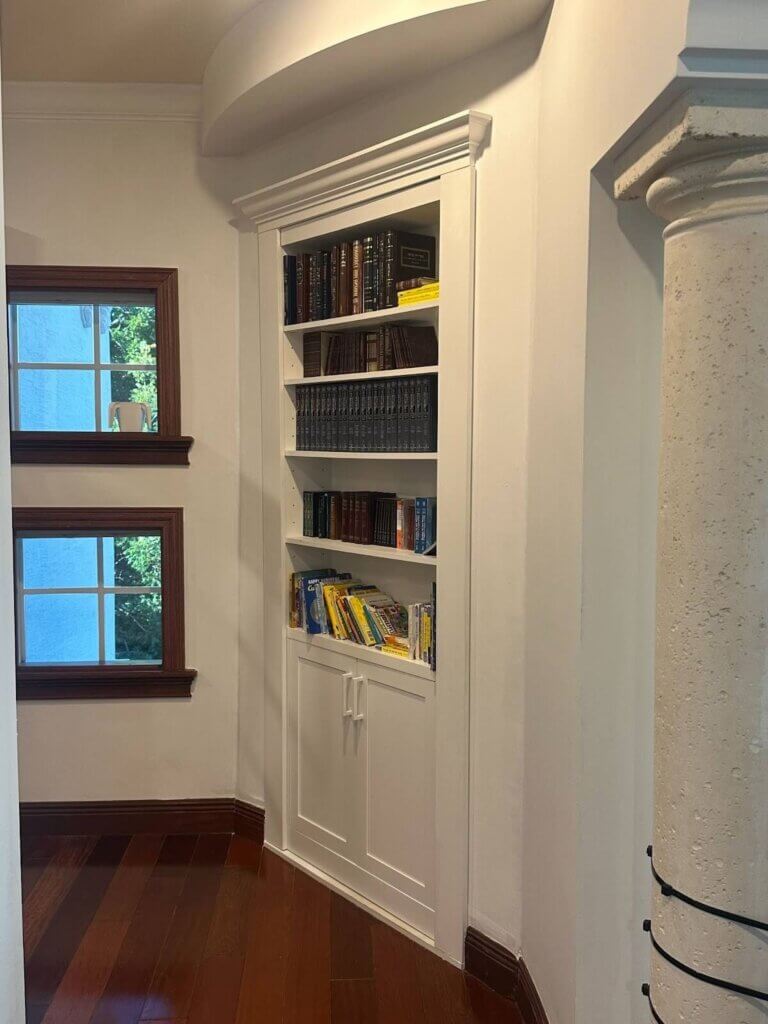
The Hidden Door Store’s hidden built-in doors are recessed units. They sit back into the wall rather than sitting in front of it. These door designs use flush installation, making them completely level with the surrounding surfaces.
Designed to integrate directly into the room’s architecture and wall system, a built-in hidden door appears completely invisible when closed. It blends seamlessly with the adjacent trim, paneling or shelving when it matches your architectural style, creating an illusion that it’s been part of the space since day one.
Common Styles
The most common built-in hidden door styles are the wall panel and the bookcase. The effectiveness of a panel hidden door design is self-evident, as it looks identical to the rest of the wall. Camouflage makes or breaks the disguise, and a secret door masquerading as wall paneling can be the most convincing of all when properly fabricated and installed.
Recessed bookcase hidden door concepts work because they can look natural in virtually any American architectural style and foreign interior design principles, including the Japanese concept of “kanso” or simplicity, which promotes closed-off areas to highlight minimalism.
Crown molding helps these units coexist harmoniously with traditional interior design elements. Flush lines and light trim allow these hidden doors to mesh well with modern spaces.
Secret doors masked as full-length mirrors are technically built-ins, but they’re not completely recessed. Thresholded units mimic the look of hanging mirrors, so the frame juts out. Still, most of the body of a mirror hidden door is flush-mounted and can appear to float like a ghost door.
Major Advantage
The major advantage of built-in secret door designs is more seamless integration. They rarely take up floor space and are more suitable for high-traffic areas, such as the second-floor landing that everyone uses to access the bedrooms and should remain unobstructed.
What Is a Freestanding Hidden Door?
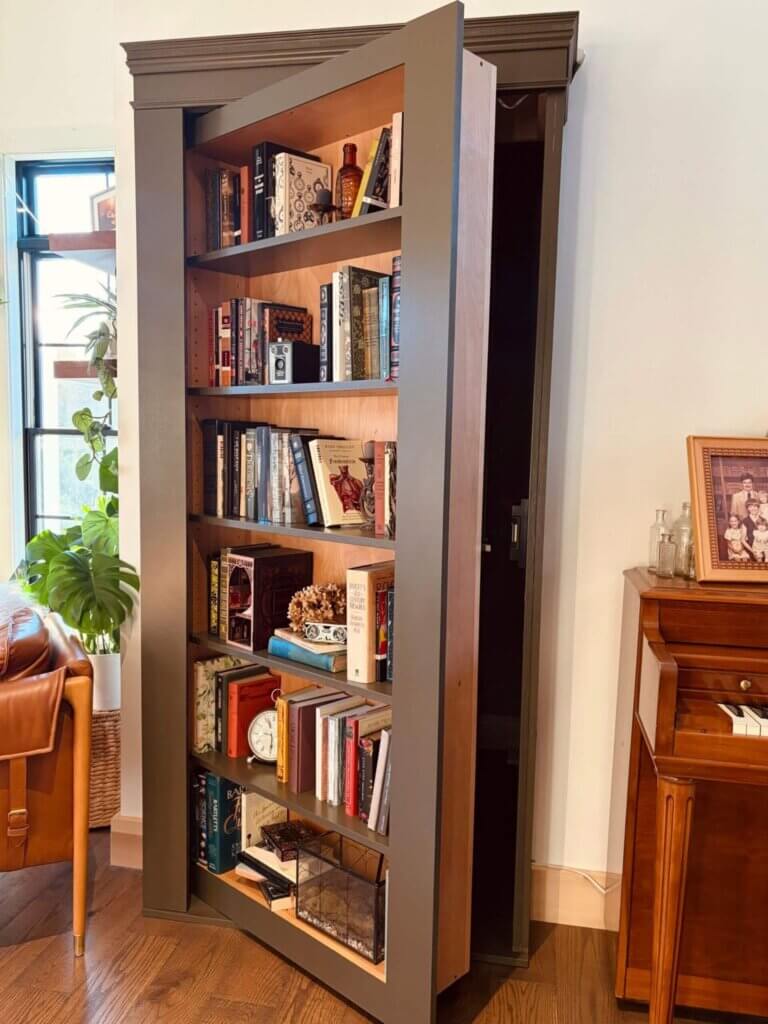
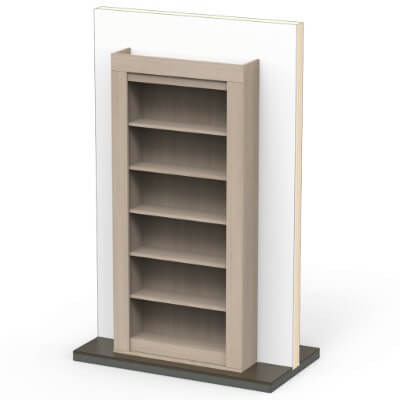
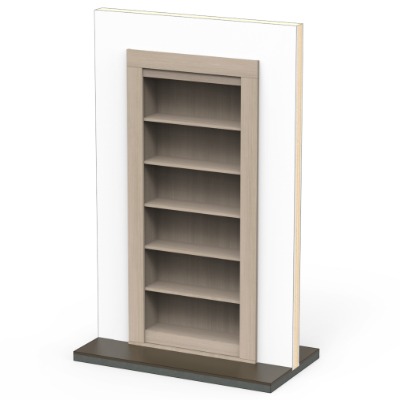
Freestanding hidden door systems look like movable pieces of furniture. They sit in front of the wall, covering the entrance to a secret passage or room while keeping their side panels visible.
Hidden Door Store’s doors are built-in by default, but a “freestanding appearance” is an optional upgrade for some designs, including bookcases, linen closets, shoe storage and wine racks. Still, they’re built-in, in the sense that they’re fixed to the wall. Observers would assume that they’re just stand-alone pieces purposely used to elevate the space when mixed with fitted furniture.
Common Uses
Many people choose freestanding hidden doors over recessed ones to simplify renovations or remodeling projects. They can be taller and wider than the openings they cover, so there’s less need to modify the dimensions of the hole in the wall.
The cabinet of a freestanding unit stays on the public side and doesn’t penetrate into the concealed space. That’s one less engineering challenge to solve.
Major Advantage
The major advantage of freestanding doors is simpler and faster installation. Setting them up typically requires less work, which means less disruption for you.
Which Option Is Right for You?
Ask yourself these questions to decide between built-in and freestanding hidden doors:
- Do you want maximum concealment? Any secret door can hide in plain sight when flawlessly fabricated, thoughtfully placed and properly installed. Having said that, built-in products tend to blend into their surroundings more seamlessly. The paneled hidden door, in particular, can go unnoticed by mimicking the rest of the wall.
- Are you remodeling or retrofitting? If you’re remodeling, consider a recessed door, as you can address any prevailing engineering issues during construction. If you’re retrofitting, go with a freestanding unit because it’s easier to install.
- How much construction are you comfortable with? Flush-mounting doors entails more installation difficulties. If you wish to minimize disruption, choose a unit that only covers the wall opening.
- Is the door location in a high-traffic area? Freestanding doors take up floor space, so go with a recessed one to avoid disrupting traffic flow.
- Is the hidden room decorative or protective? The Hidden Door offers secure panel door kits with a hidden magnet key as the standard switch and secret vault mirror doors with optional UL Level 3 armor. If you just want something decorative, any other built-in or freestanding product will do.
- Is security or convenience the priority? The Hidden Door Store’s built-in door systems have more security features, while the freestanding ones require less effort to set up.
Hidden Door Store Can Help You Decide the Door That’s Right for You
Choosing between built-in and freestanding doors is straightforward, but overlooking minor details can ruin the unit’s camouflage. To select the perfect secret door, contact the Hidden Door Store to discuss your vision.